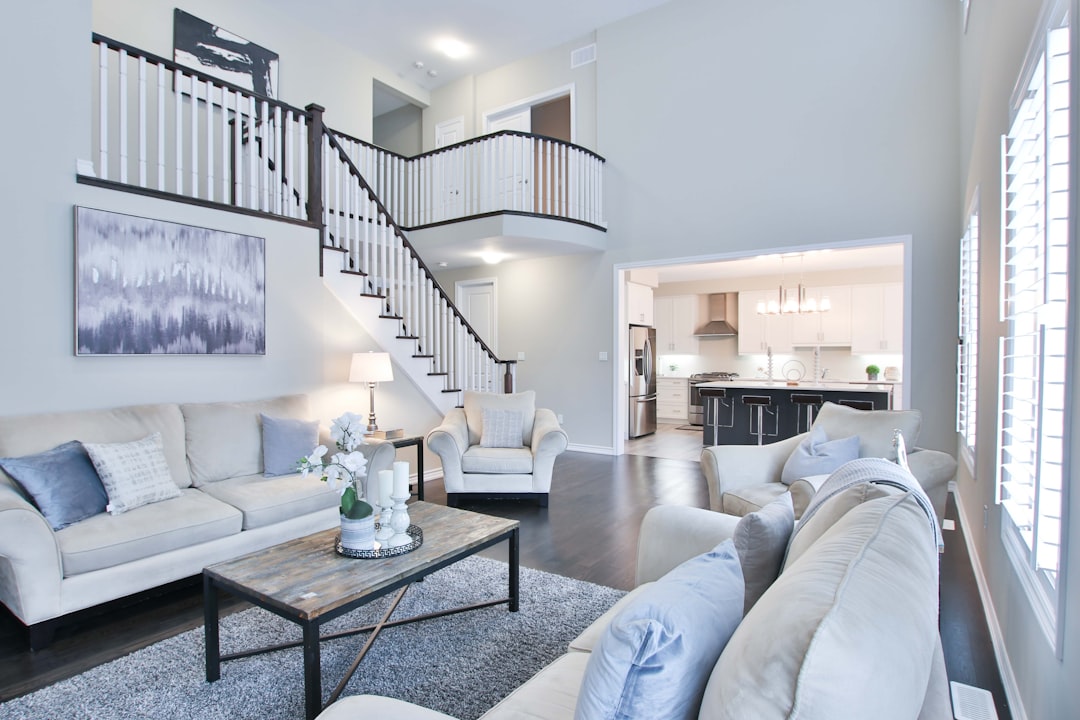
Wellness real estate has a branding problem — not because the underlying ideas are wrong, but because the phrase has become a catch-all that can mean anything from a yoga studio in the amenity building to circadian lighting tuned to a specific color temperature at dusk. Knowing which features have a plausible mechanism behind them and which are decorative vocabulary is, at this point, a practical skill for anyone looking at property in California’s North Bay.
The global wellness real estate market is widely projected to cross $1.8 trillion by 2030, according to research from the Global Wellness Institute, though as with any long-range market forecast, treat that figure as directional rather than definitive. What’s less debatable is that the category is structurally growing — and that Napa Valley and Sonoma County, with their outdoor-oriented culture, vineyard landscapes, and high concentration of buyers who relocated specifically to slow down, have become a natural proving ground for what these homes actually look like in practice.
The Features Worth Taking Seriously
Not every wellness claim is marketing vapor. Some design interventions have a reasonable body of evidence behind them, or at least a coherent mechanism you can evaluate.
Circadian lighting systems are one of the more technically grounded. These use tunable LED fixtures — often controlled via a dedicated scene processor rather than a standard dimmer — that shift from cooler, higher-Kelvin output during working hours toward warmer tones in the 2700K range as evening approaches. The biological rationale (blue-spectrum light suppresses melatonin) is well-established; whether a $40,000 lighting retrofit meaningfully improves your sleep compared to a $12 pair of blue-light glasses at 9 p.m. is a genuinely open question.
Air quality infrastructure is another area where the specifics matter enormously. A developer who installs MERV-13 filtration in the HVAC, with sealed ductwork and ERV (energy recovery ventilation) to maintain fresh-air exchange without bleeding conditioned air, is offering something measurable. One who installs a decorative diffuser in the lobby is not. Ask for the MERV rating and the ventilation rate in air changes per hour — if that answer comes back vague, that tells you something.
Acoustic separation — resilient channel construction between shared walls, double-stud framing, or even basic STC ratings on windows — is consistently underrated and consistently undertreated in new construction. In wine country homes, where open plans and hard surfaces are common, this is worth specific inquiry.
What the North Bay Context Actually Adds
The North Bay has characteristics that make some wellness features more relevant than they’d be elsewhere, and others largely irrelevant.
Wildfire smoke is a genuine, recurring air quality event in Sonoma and Napa counties. That’s not a hypothetical risk — it’s a documented seasonal reality that has intensified over the past decade. A home with a well-sealed envelope and credible filtration capability is a different category of asset here than it would be in, say, San Jose. Buyers thinking through this tradeoff would do well to read through the considerations in Wildfire Risk and Property Value: Understanding the $1.4T Threat to Western Homes — the implications for habitability during smoke events are part of that conversation.
Thermal comfort is another area where local conditions diverge from the marketing template. Parts of Napa and Sonoma have significant day-to-night temperature swings, sometimes 40°F or more. Passive thermal mass — thick concrete slab floors, rammed earth walls, heavy stone — does real work in that climate in ways it wouldn’t in a place with narrower diurnal range. This is one wellness feature you can actually evaluate by walking through a property at midday versus late afternoon.
What tends to matter less in this region: elaborate humidity control systems engineered for the mid-Atlantic muggy summer, rooftop pools positioned as “hydrotherapy features,” and any amenity that depends on a full-time staff to remain functional.
Separating the Checklist from the Architecture
Developers marketing wellness homes often reference certification frameworks — WELL Building Standard and Fitwel are the two most common in US residential contexts. These are real frameworks with real criteria, not pure greenwashing, but a project can satisfy a certification at a relatively modest intervention level and still merit the badge. More useful than asking “is this WELL certified?” is asking which specific features earned which credits, and what the ongoing maintenance requirements are for those systems. Mechanical ventilation systems that earn air quality credits require filter replacement schedules and periodic duct inspection — if the HOA budget doesn’t account for that, the feature degrades within a few years.
The same principle applies to any technology-dependent feature. Smart home systems that integrate air quality monitoring, occupancy-based ventilation, and circadian lighting are only as useful as their software support. Ask when the system was last updated, what happens if the manufacturer discontinues the platform, and whether the hardware uses open protocols (like Z-Wave or Thread/Matter) or a proprietary ecosystem. Proprietary systems can become stranded assets. For anyone thinking about how these technology layers interact with cooling and energy costs more broadly, the breakdown in 13 Million Americans Are Struggling To Keep Their Homes offers useful context on what running these systems actually costs.
A Short Checklist for Evaluating a Wellness-Positioned Property
Before accepting a developer’s wellness narrative at face value, run through these specific questions:
- What is the MERV rating of the HVAC filtration, and what is the designed ventilation rate (ACH)?
- Is the building envelope tested for air leakage (blower door test result)?
- What is the STC rating on exterior windows, and is there any acoustic treatment between bedrooms and common areas?
- For any circadian lighting system, what protocol controls it, and is it field-programmable by the owner?
- For water quality features, what is the specific filtration technology and what does annual maintenance cost?
- What certification has the project pursued, and which specific credits were achieved?
- Does the HOA budget have a line item for maintaining these systems?
The list is deliberately unglamorous. Most of the genuinely useful wellness features in a home are not the ones photographed for marketing materials — they’re in the mechanical room and the wall assembly spec sheet.
The Practical Next Step
If you’re evaluating a specific property in Napa or Sonoma that carries wellness positioning, request the mechanical specifications and any third-party certification documentation before the second showing. If a developer or listing agent can’t produce those documents — or produces only brochure-level descriptions — that is itself the relevant data point. Wellness real estate at its best is a set of verifiable building science choices. At its worst, it’s a premium attached to a particularly photogenic meditation corner. The difference shows up in the documentation, not the décor.
For buyers thinking about what modifications make the most sense in an existing North Bay home — rather than purchasing a new-construction wellness product — How to Pay for Aging-in-Place Home Modifications covers a related set of decisions about health-supportive design choices and how to finance them, which often overlaps more with what buyers actually need than any new-development amenity package.