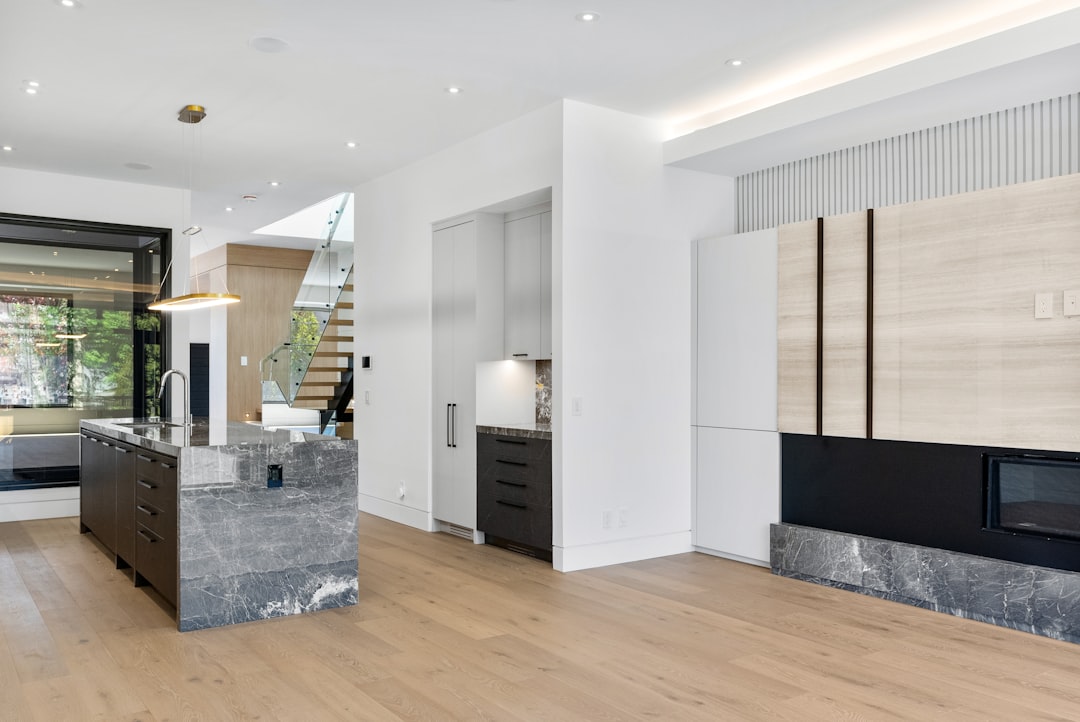
Parents have been known to make surprising spatial trade-offs when a good elementary school is a twelve-minute walk away. A smaller backyard, a galley kitchen, a shorter driveway — these are the compromises that come up repeatedly when you look closely at how families evaluate houses near walkable schools. The question isn’t really whether proximity matters. It’s how much space, money, and functional square footage parents are quietly giving up to get it.
The Walk Radius That Actually Changes Buying Behavior
In urban planning, the standard “walkable” threshold is a half-mile, which works out to roughly an eight-to-ten-minute walk for an adult moving at a normal pace. For a six-year-old with a backpack and a tendency to stop and investigate every sidewalk crack, that same route might clock in closer to fifteen minutes. The meaningful school-walk radius for families with young children is generally tighter — a quarter-mile to three-eighths of a mile — and that compression has real spatial consequences for which streets end up in a family’s consideration set.
When we trace that radius on a street map, the inventory problem becomes obvious quickly. A quarter-mile circle around a popular elementary school might overlap with just a handful of blocks, and in most established neighborhoods, those blocks haven’t grown new houses lately. Demand concentrates. So does the willingness to accept floor plans that wouldn’t otherwise make the cut.
A dated kitchen layout suddenly becomes less disqualifying when drop-off is a seven-minute walk rather than a twenty-minute drive. Dated features that genuinely don’t add value elsewhere in the market get rationalized within the walk zone in ways that surprise buyers once they reflect on it.
What Families Are Actually Trading Off
The spatial trade-offs cluster around a few predictable categories:
Lot size and outdoor space. Homes closest to walkable schools tend to sit on older, smaller lots — many of these neighborhoods were built before two-car garages and suburban yard expectations became standard. Families moving from newer construction farther out often absorb a 20–35% reduction in yard area, verified against their current lot square footage.
Bedroom-to-bathroom ratios. Older in-fill neighborhoods near popular schools frequently have homes with three bedrooms and one-and-a-half baths — configurations that require families to get creative about shared space. We’ve seen buyers resolve this by converting a dining room into a third bedroom or restructuring an unfinished basement, projects that cost roughly $15,000–$40,000 depending on local labor rates (verify with two or three local contractors before budgeting).
Garage and storage. Single-car or no-garage situations are disproportionately common in the walk zone. Families who relocate from suburbs often find themselves redistributing gear — sports equipment, bikes, strollers — across spaces that weren’t designed for it. Squeezing useful storage out of underused areas becomes a practical necessity rather than a preference.
Total square footage. This is the most quantifiable trade-off. Based on patterns we’ve observed across multiple metro areas, families prioritizing walkability to school regularly absorb homes 15–25% smaller than their original search criteria specified — sometimes more. Run your own square-footage-per-dollar comparisons using our site’s calculators before assuming the premium is worth it for your specific situation.
How to Measure the Real Cost Before You Commit
The price premium for walkable-school proximity is real, but it’s notoriously difficult to isolate from other neighborhood variables like transit access, lot size, and age of housing stock. Rather than trusting headline figures, here’s a more grounded approach:
- Define your actual walk radius. Don’t use a crow-flies distance — use Google Maps or a similar tool in walking mode, then add 25% to account for a child’s pace and realistic crossing wait times. A 0.4-mile map distance might be a 14-minute walk with kids.
- Pull sold comps within and just outside your radius. The line between “walkable” and “one bus stop away” can shift prices meaningfully. Comparing sold prices per square foot inside and outside the radius — across similar bedroom counts and lot sizes — gives you a cleaner premium estimate than any generalized statistic.
- Account for the deferred car cost. Families who genuinely eliminate one school-run car trip per day, or reduce from two school-trip vehicles to one, may offset $3,000–$7,000 per year in transportation costs (fuel, maintenance, depreciation). Over a seven-year ownership window, that’s not trivial relative to a purchase price premium. Verify current fuel and maintenance costs against your own driving patterns.
- Stress-test the floor plan. Walk the house with the actual number of people who will live in it. A 1,400-square-foot house functions very differently at 8 a.m. on a school day than it does during a weekend open house. If you can arrange a second visit during weekday morning hours, do it.
- Check the route, not just the distance. A seven-minute walk that crosses a four-lane arterial without a light, or one that lacks a continuous sidewalk for two blocks, is functionally different from a seven-minute walk through a grid of residential streets. Map every crossing point before calling a house “walkable.”
The Spatial Planning Question That Often Goes Unasked
Here’s what most families don’t model before buying into the school-walk zone: what happens in four years? Elementary school proximity has a defined shelf life. A first-grader who walks to school in the fall becomes a middle schooler in five years, and middle schools rarely sit inside the same tight radius. The spatial premium you pay today may outlast its primary use case before the house’s next likely sale.
That’s not an argument against buying in the walk zone. Walkability to schools correlates with walkability to other amenities — transit, parks, small retail — that retain value regardless of what grade the kids are in. But it’s worth being clear-eyed about which part of the premium you’re paying for the school specifically, versus which part you’re paying for a genuinely walkable neighborhood. Understanding how local factors translate into real value differences takes more legwork than a single proximity search, but it protects you from overpaying for a variable that will change on you.
Smaller homes in these zones also invite renovation pressure. Families who bought tight floor plans expecting to “make it work” often find themselves planning additions or interior restructuring within two or three years of moving in. Factor realistic remodeling cost ranges — and current material lead times — into your total-cost picture before signing.
Your Next Step
Before you widen or narrow your search based on school proximity, walk the actual route yourself — ideally at 7:45 a.m. on a school day. Count every unsignaled crossing, every stretch without a sidewalk, and every block that would require a child to navigate alone. Then pull the sold price-per-square-foot data for homes inside and outside your defined walk radius and run the numbers side by side. The premium may be worth it. But it should be a decision made with a tape measure and a spreadsheet, not a feeling.